
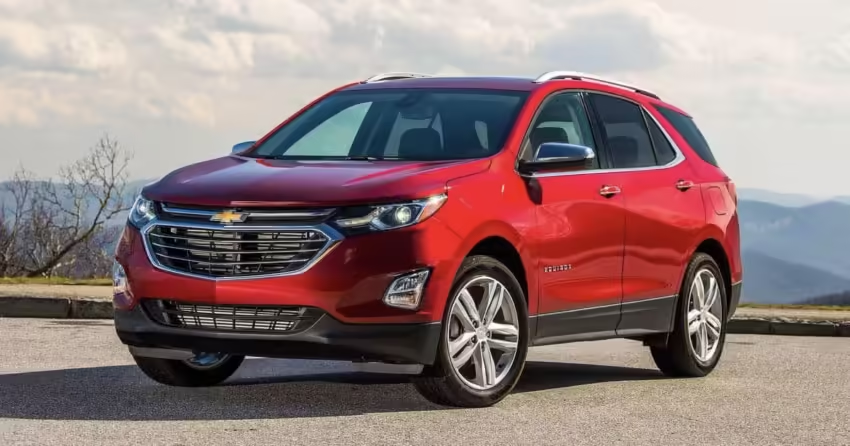
When buying a used vehicle, most buyers are looking for a reliable car that will provide many years of dependable service without requiring major repairs. Today, there is a wide variety of used vehicles available, and you can browse current listings and compare different models by visiting https://www.autozenmotors.com/. However, appearance alone does not accurately reflect a vehicle’s mechanical condition. According to international automotive associations, approximately 30–40% of used cars have hidden defects, making a thorough inspection before purchase one of the best ways to avoid costly repairs later.
Body Condition and Exterior Appearance
The exterior creates the first impression, but every used vehicle should be carefully inspected in good lighting before making a decision.
Pay attention to the following:
- consistent gaps between body panels;
- no visible signs of welding or extensive body filler;
- uniform paint color across all body panels;
- no significant rust on the rocker panels, wheel arches, or underbody;
- original windows with matching manufacturing dates.
Minor scratches or paint chips are completely normal on a used vehicle and are generally not considered serious concerns. Much more important is the absence of major accident damage and evidence that the vehicle’s body structure has been properly repaired, if necessary.
Engine and Transmission Condition
Even a vehicle that looks excellent on the outside may require expensive engine or transmission repairs. For this reason, the mechanical components deserve especially careful attention.
During the inspection, it is advisable to:
- Start the engine while it is cold.
- Listen for unusual noises.
- Inspect the engine compartment for oil or fluid leaks.
- Test the transmission during a drive.
- Evaluate acceleration and check for vibrations.
A healthy engine should start easily without excessive cranking, idle smoothly, and produce no abnormal smoke. An automatic transmission should shift smoothly without harsh impacts, while a manual transmission should engage gears without grinding or excessive effort.
Even small warning signs can indicate expensive repairs in the future and should never be ignored.
Suspension, Brakes, and Steering
A test drive is one of the best ways to evaluate the true condition of a vehicle’s suspension and steering components.
Positive signs include:
- no knocking noises when driving over uneven roads;
- stable braking without pulling to one side;
- a centered steering wheel while driving straight;
- no excessive vibration at higher speeds;
- smooth suspension performance.
According to service center statistics, suspension components are among the most common repair expenses after purchasing a used vehicle. A professional inspection on a lift can identify worn bushings, ball joints, stabilizer links, and other suspension parts before the purchase.
Interior Condition and Service History
The condition of the interior often reflects how carefully the previous owner maintained the vehicle. If the advertised mileage is relatively low but the steering wheel, driver’s seat, and pedals show excessive wear, the odometer reading may not be accurate.
It is also recommended to test:
- the climate control system;
- the multimedia system;
- power windows;
- all switches and controls;
- seat belts and airbag warning systems.
Reviewing the vehicle’s maintenance history is equally important. Regular oil changes, filter replacements, brake fluid changes, and other scheduled maintenance significantly extend the lifespan of major mechanical components. Complete service records are always a valuable advantage.
Why a Comprehensive Inspection Matters
Even experienced drivers cannot always identify every hidden problem during a visual inspection. For this reason, many automotive experts recommend performing a computerized diagnostic scan, measuring paint thickness, and having the vehicle inspected by a qualified repair facility.
A comprehensive inspection helps:
- verify the actual mileage;
- identify evidence of serious accident damage;
- evaluate the condition of the engine and transmission;
- detect hidden electronic system faults;
- estimate potential repair costs before purchase.
This thorough approach greatly reduces the likelihood of purchasing a vehicle with expensive hidden defects.
Conclusion
Choosing a used vehicle requires patience and a comprehensive evaluation. A car’s true condition is determined not only by its appearance but also by its mechanical reliability, documented maintenance history, lack of major structural damage, and proper operation of all essential systems. The more carefully a vehicle is inspected before purchase, the greater the chances of buying a dependable car that will provide years of safe, comfortable, and trouble-free driving with minimal unexpected repair costs.